
Clear-Com Pushes Intercom Further Into Cellular, IP, and Software-Defined Workflows
Clear-Com Pushes Intercom Further Into Cellular, IP, and Software-Defined Workflows
Clear-Com used NAB 2026 in Las Vegas to preview a significant expansion of its communications ecosystem. The headline is FreeSpeak Cell, a new cellular-based wireless intercom system built to bypass growing RF congestion, but the bigger story is broader: Clear-Com is also pushing Arcadia and Eclipse HX deeper into IP-centric, software-defined, and higher-density workflows.
A Clear Shift Toward Scalable, Modern Communications
Clear-Com’s latest announcements are aimed squarely at the realities of modern production. Wireless spectrum is more crowded, productions are more distributed, and customers increasingly expect systems to flex across fixed venues, remote workflows, cloud-connected environments, and IP-based infrastructure. The new products and software updates shown at NAB 2026 address those pressures directly.
None of these new additions are available for immediate purchase right now in the sense of a full, broad rollout across the entire lineup, but the direction is clear. Clear-Com is building a more unified ecosystem where cellular, matrix, IP, wired, and wireless communications can work together with greater scale and fewer traditional hardware constraints. If this category matters to your workflow, this is one to watch closely.
FreeSpeak Cell
The flagship announcement from Clear-Com at NAB 2026 was FreeSpeak Cell, a cellular-based beltpack system designed to move wireless intercom beyond the crowded DECT, Wi-Fi, and traditional RF landscape.
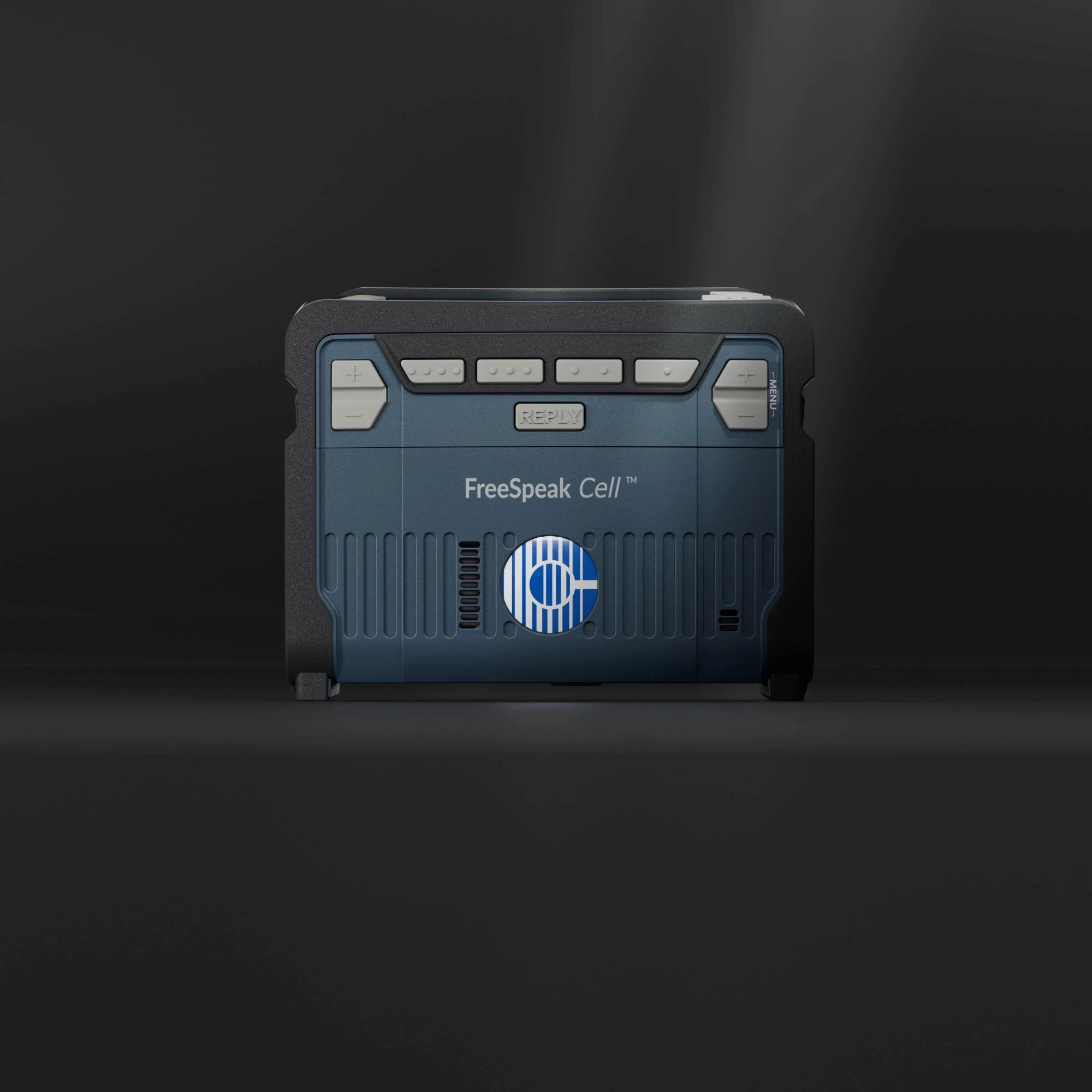
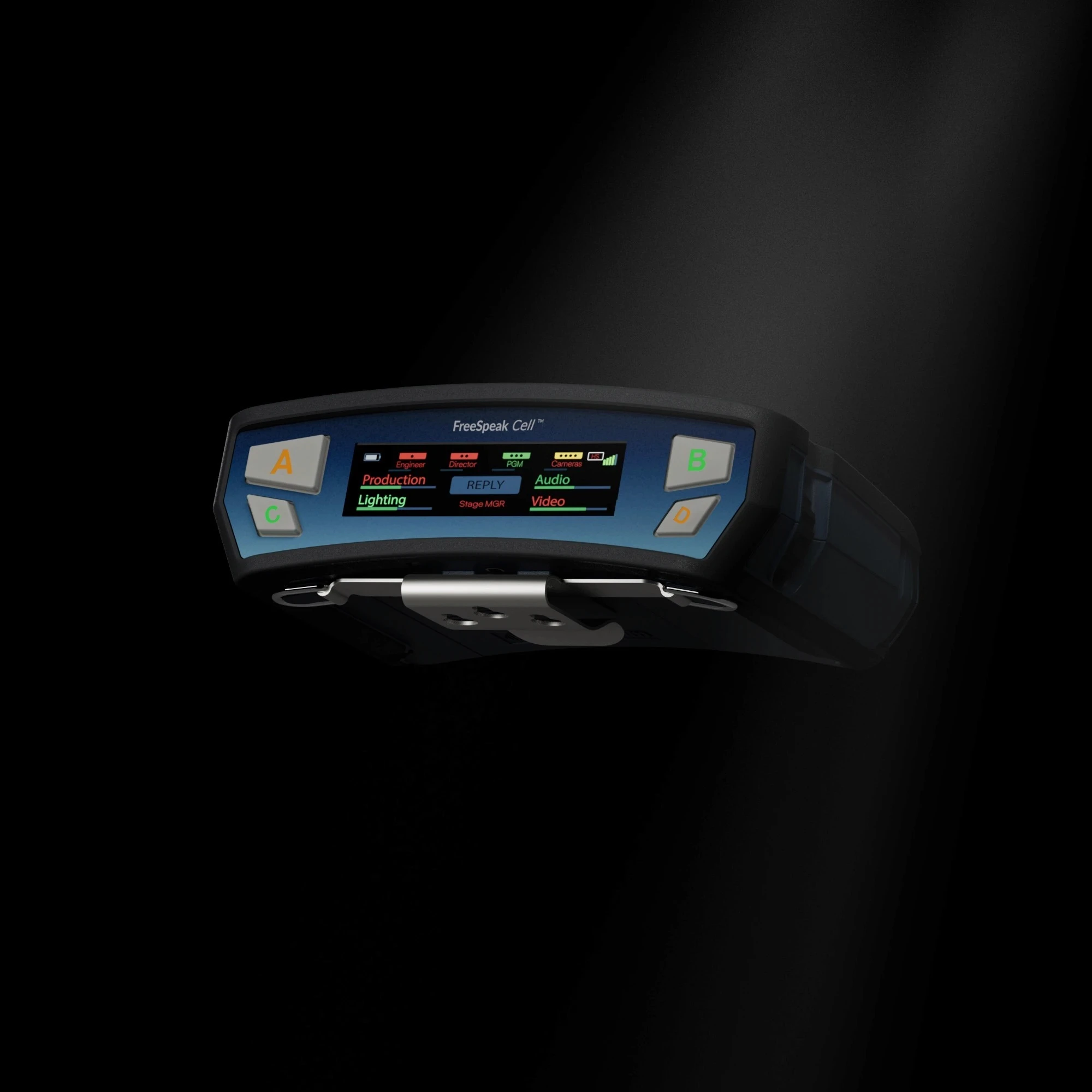
This is not just another wireless beltpack. FreeSpeak Cell is built around LTE and 5G infrastructure, including RedCap, and is designed to operate over both public and private cellular networks. That matters because Clear-Com is tackling one of the biggest pain points in live production communications: congestion. In large venues, dense live-event environments, and RF-heavy productions, spectrum coordination is increasingly complex and often expensive in time, labor, and infrastructure.
FreeSpeak Cell changes the conversation by using carrier-grade infrastructure rather than relying only on localized RF systems. The system supports dual SIM operation, including physical SIM and eSIM, and can be configured for public cellular, private cellular, or a hybrid approach. That deployment choice is a major differentiator because it shapes the entire architecture of the system.
From a practical standpoint, FreeSpeak Cell is designed for large-scale and distributed communications environments where conventional wireless systems hit either channel limits, coverage limits, or coordination barriers. Clear-Com says the platform supports 100 or more beltpacks and can scale to hundreds of users depending on network configuration. Coverage can extend beyond a single building or compound, which is exactly the kind of capability distributed productions increasingly need.
The system has also been field tested extensively at major events including the Super Bowl and the Oscars. That detail matters. This does not sound like a concept-stage reveal. It sounds like a mature product launch shaped by real-world deployment feedback. That should give production teams more confidence that the system was designed around actual event conditions rather than lab-only assumptions.
Why FreeSpeak Cell matters
- Operates over LTE and 5G instead of relying only on traditional RF coordination
- Supports public and private cellular deployments, plus dual SIM flexibility
- Designed for wide-area communications across large or distributed production zones
- Addresses RF congestion in UHF, DECT, and Wi-Fi heavy environments
- Supports large user counts and high-density communications needs
- Currently works with Eclipse HX, with Arcadia support expected after initial release and Gen-IC support planned later in the year
Arcadia, Avalon, and the Move Toward Leaner IP-First Systems
Alongside FreeSpeak Cell, Clear-Com also previewed a more IP-centric direction for the Arcadia platform, including a new IP-only version referred to as Avalon and a new hybrid touch key panel concept.
Avalon is positioned as a lower-cost, IP-only version of Arcadia Central Station. The logic is straightforward: not every customer still needs the same front-panel display and analog I/O footprint if their workflow is already network-centric. By removing those elements while retaining the same IP capacity and licensing model as Arcadia, Clear-Com is aiming at customers who want the power of the platform without paying for hardware elements they do not intend to use.
That makes Avalon a meaningful signal. It suggests Clear-Com sees a growing segment of the market shifting toward cleaner IP-first deployments, where interoperability, network capacity, and software-defined behavior matter more than legacy connectivity on the front end. A lower price point also makes that path easier to justify for customers modernizing incrementally.
The hybrid key panel concept is also worth watching. It suggests Clear-Com is experimenting with interfaces that combine the flexibility of touch with the immediacy of tactile control. That hybrid design could be especially attractive in environments where operators want fast access to dynamic panel behavior without giving up physical interaction entirely.
Arcadia 4.1 and Eclipse HX15: The Bigger Story Is Software
The hardware headlines will get the attention, but the software story may have the longer-term impact. Clear-Com’s updates to Arcadia and Eclipse HX point toward a more role-based, flexible, software-defined communications model.
Arcadia 4.1 adds IFB support, a critical feature addition for broadcast customers. That alone matters because IFB is not a niche requirement. It is foundational to many live production and broadcast workflows, especially for talent monitoring and program coordination. Clear-Com is also extending Arcadia’s interoperability through support for AES67-enabled panels, which further strengthens its role inside IP-based systems.
Eclipse HX15, however, is where the architectural shift becomes more obvious. Clear-Com describes the new ARC model as Access, Resource, and Configuration, and the key point is that the system is moving away from rigid, device-per-port assumptions. Instead, it is leaning into identity-based access, role-based workflows, and dynamic allocation of resources.
In practical terms, this means hardware is becoming less of a fixed limitation. Users can log in, move between devices, and retain consistent behavior across panels, beltpacks, and virtual clients. Resources can be assigned more intelligently, and the system can scale with greater efficiency. Clear-Com also highlighted floating ports as a major shift, replacing the traditional device-per-port model with something far more flexible. That opens the door to substantially higher capacity and much better resource use for customers with multiple devices or more fluid communications needs.
Clear-Com also tied these changes directly to expanded density. Eclipse HX can now support significantly more endpoints, including expanded FreeSpeak family support and higher-density keypanels. The company highlighted figures such as up to 424 registered beltpacks with up to 255 online at a time, and even higher IP port counts in certain frame scenarios. For large, demanding communication environments, that is not a minor improvement. It is a serious capacity conversation.
Why these updates matter
- Arcadia 4.1 adds IFB functionality and stronger broadcast readiness
- AES67 panel support improves IP interoperability
- Eclipse HX15 introduces ARC, a more software-defined architecture
- Floating ports replace rigid device-per-port assumptions
- Role-based and identity-based workflows improve flexibility across devices and users
- System scale and endpoint density increase significantly for complex environments
Final Take
What Clear-Com showed at NAB 2026 in Las Vegas was not just a handful of isolated updates. It was a broader statement about where professional intercom is going. FreeSpeak Cell addresses wide-area communications and RF congestion with a cellular-first approach. Arcadia and Avalon push further into IP-driven deployment models. Eclipse HX15 moves the platform toward software-defined architecture, dynamic resource use, and more flexible user behavior across devices and locations.
The common thread is flexibility. Clear-Com is clearly working toward a communications ecosystem that can adapt to different infrastructures, larger user counts, and more distributed productions without forcing customers into the same old hardware limitations.
These products and updates were shown at NAB in Las Vegas, and more information is still expected to come out. If you are planning future intercom, venue, or broadcast communications upgrades, stay tuned. The most important details around rollout, configuration strategy, and broader ecosystem support are still developing.
- #5G intercom
- #AES67
- #Arcadia Central Station
- #Avalon
- #broadcast communications
- #cellular intercom
- #Clear-Com
- #Clear-Com NAB
- #Eclipse HX
- #EHX v15
- #FreeSpeak
- #FreeSpeak Cell
- #IFB
- #intercom systems
- #IP intercom
- #live production intercom
- #LTE intercom
- #NAB 2026
- #private cellular
- #production communications
- #public cellular
- #wireless intercom
Recent Posts
-
FOR-A Viztrick AiDi: AI-Powered Graphics & Analysis for Live Sports Production
AI-Powered Sports Production FOR-A Viztrick AiDi An AI-powered, tablet-operated system that visual …Oct 5th 2026 Delaney Harrison -
Panasonic Introduces the AW-UER200 Series of 5K PTZ Cameras
Panasonic Introduces the AW-UER200 Series of 5K PTZ Cameras Panasonic is expanding creative poss …Sep 25th 2026 Delaney Harrison -
Yamaha Expands Professional Audio with the DM5 Series and New RUio I/O Solutions
New from Yamaha Yamaha Expands Professional Audio with the DM5 Series and New RUio I/O Solutions F …Sep 23rd 2026 Delaney Harrison