
What Was New from Sony at NAB 2026
What Was New from Sony at NAB 2026
NAB 2026 in Las Vegas brought a strong mix of Sony updates across field production, PTZ workflows, live production cameras, professional monitoring, camera tracking, and networked switching. The biggest theme was clear: Sony is continuing to connect acquisition, live production, IP infrastructure, and post-ready workflows into a more flexible production ecosystem.
A Strong NAB Showing for Field, Studio, and Live Production
Now that NAB has wrapped, the announcements are easier to evaluate through a practical lens. Sony’s updates were not limited to one category. Instead, they touched nearly every part of professional production: connected camcorders for field teams, smarter PTZ firmware, new live production cameras, reference monitors, markerless camera tracking, and an updated control panel for the MLS-X1 switcher.
PXW-Z300: Better Connectivity for Field Production
Sony’s PXW-Z300 remains a key XDCAM option for news, documentary, and field production, and NAB 2026 brought more attention to how Sony is expanding connected workflows around it.
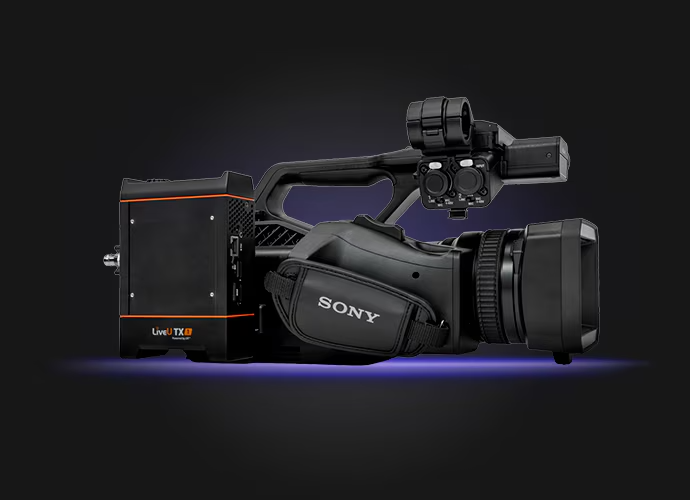
The most important update around the Z300 is connectivity. Sony highlighted the LiveU TX1, a compact transmission unit designed specifically for Sony professional cameras. It supports 4G, 5G, and Wi-Fi and connects through SDI or USB-C, giving field teams a more direct way to move footage and live video from camera to destination.
For news teams, ENG crews, live event producers, and anyone already working inside the LiveU ecosystem, the TX1 is a natural fit. It can stream directly to LiveU hardware receivers or Sony’s software receiving app. Existing LiveU users can also add functionality through Sony’s PWA-RXS license path, making this less of a standalone accessory and more of a practical workflow expansion.
The PXW-Z300 itself brings several production-friendly advantages, including AI autofocus and subject tracking, a 17x zoom lens with a constant f/1.9 aperture, up to 4x digital magnification in HD, and a side V-mount adapter option for accessories or power banks. Paired with the TX1, it becomes a stronger tool for fast file transfer, bonded IP transmission, and rapid field-to-studio delivery.
- Compact LiveU transmission option designed for Sony professional camera workflows
- Supports 4G, 5G, and Wi-Fi connectivity
- Connects through SDI or high-speed USB-C
- Designed for rapid file transfer and video-over-bonded-IP workflows
- Easy V-mount attachment for an integrated PXW-Z300 setup
PTZ and Cinema PTZ Firmware Updates
Sony also used NAB to highlight meaningful firmware updates across its FR7, BRC-AM7, and SRG-A series PTZ cameras.

ILME-FR7 Version 4.0
The FR7 update adds OpenTrack IO support, allowing the camera to transmit position, lens calibration data, and timecode to virtual production renderers such as Unreal Engine and Pixotope.
View FR7
BRC-AM7 Version 3.0
The AM7 update adds AI-based basketball tracking framing, optical image stabilization, and expanded workflow options for sports and live production environments.
View BRC-AM7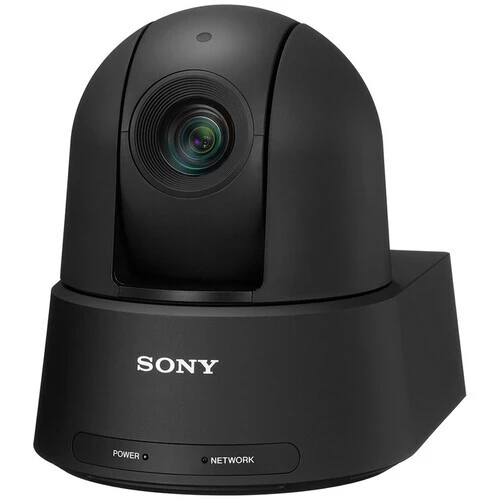
SRG-A40 and SRG-A12 Version 4.0
Sony’s A-series PTZ update adds basketball-focused auto framing and improved face registration, making it a valuable update for sports, education, worship, and multicamera production.
View SRG-A40These updates show Sony continuing to make PTZ cameras more intelligent and production-ready. For teams already using Sony PTZs, the firmware path matters because it adds real workflow value without requiring a complete hardware refresh.
New HDC Live Production Cameras
Sony refreshed its HDC live production camera lineup with new R-series models designed for improved image quality, dynamic range, and high-frame-rate performance.
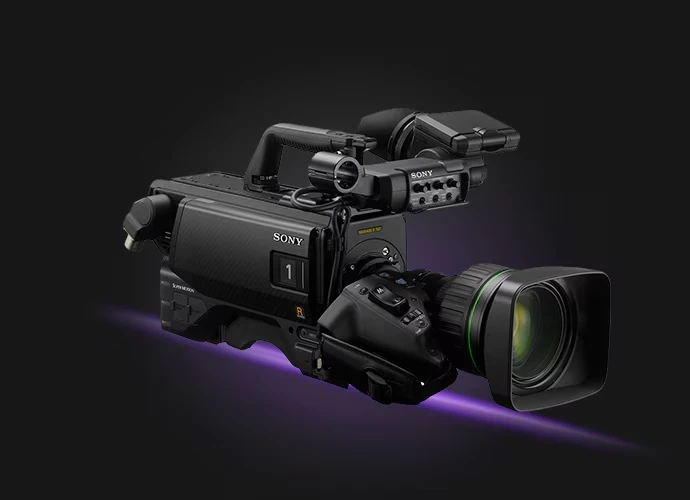
The new HDC-5500R/V, HDC-3500R/V, and HDC-3200R models are designed for high-end live production teams that need cleaner imaging, smoother handling, and stronger performance in demanding lighting conditions. Sony is emphasizing simultaneous HDR and SDR production, which continues to be a key workflow requirement for broadcasters delivering to multiple standards.
The HDC R Series uses 2/3-inch Global Shutter 3-CMOS sensors to deliver 4K image quality with strong signal-to-noise performance. Extended Dynamic Range and Multi Sensitivity Modes give operators more flexibility in challenging environments, especially when lighting conditions vary quickly or high-frame-rate capture is required.
- New HDC-5500R/V, HDC-3500R/V, and HDC-3200R models
- Built for simultaneous HDR and SDR production
- 2/3-inch Global Shutter 3-CMOS imaging
- Extended Dynamic Range and Multi Sensitivity Modes
- Wireless operation support with optional outside panels
- Expected Fall availability at pricing similar to current models in the series
New BVM Professional Monitors
Sony also expanded its professional BVM monitor lineup, with new options for both SDI and IP-based monitoring environments.

The BVM-HX1710 and BVM-HX1710N bring 17-inch TRIMASTER HX monitoring into two different workflow paths. The BVM-HX1710 is the SDI version, while the BVM-HX1710N supports native SMPTE ST 2110, making it especially relevant for teams moving toward IP-based monitoring.
At the higher end, the BVM-HX3110 is a 31-inch 4K TRIMASTER HX professional master monitor designed for environments where color confidence matters. Its color matching to client displays is useful for grading, QC, and review workflows where consistency across screens can affect creative and technical decisions.
Ocellus Camera Tracking System
Ocellus was not brand new at this year’s NAB, but it remained an important part of Sony’s virtual production and augmented reality story.
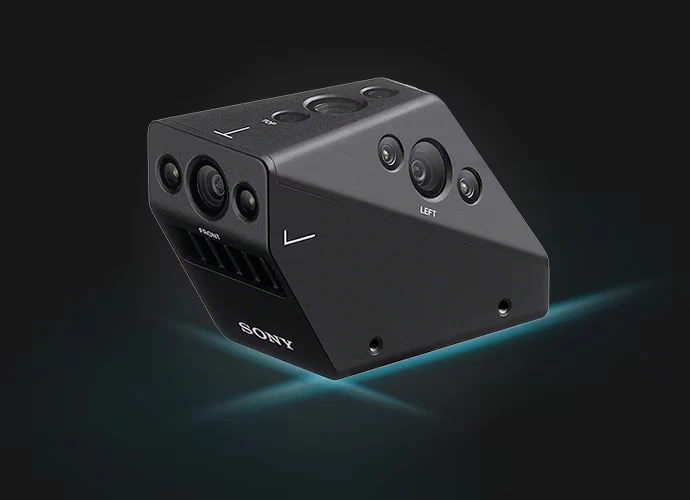
The OCELLUS ASR-CT1 is a markerless camera tracking system designed for both broadcast and cinematic applications. It uses infrared sensors and SLAM-based tracking, meaning productions do not need to place physical markers across the studio floor or walls.
Ocellus is camera agnostic and can be used indoors or outdoors. It uses four out of five image sensors on the sensor unit to track feature points from video signals, then outputs tracking metadata for virtual production engines. For news, sports, weather, AR graphics, and cinematic virtual production, that markerless approach can reduce setup complexity and make tracking more flexible.
View OcellusNetworked Live: ICP-X7000A for the MLS-X1
Sony’s MLS-X1 production switcher also gained attention through the new ICP-X7000A control panel and software updates aimed at more flexible live production.
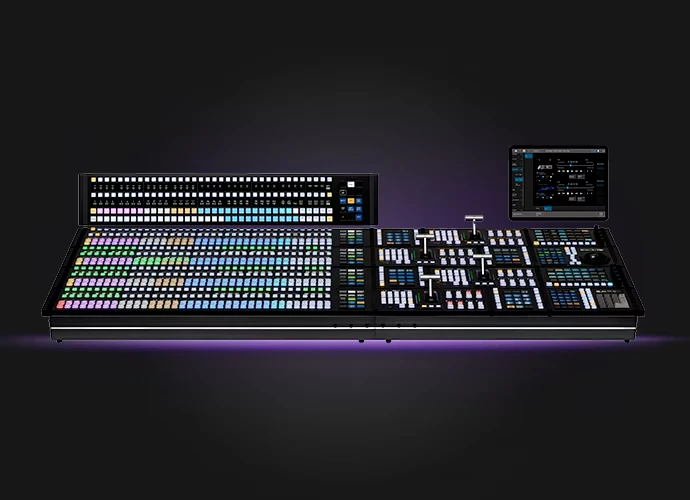
The MLS-X1 already supports both 100GbE IP and 12G-SDI, making it a serious option for hybrid live production environments. The new ICP-X7000A panel gives operators a next-generation control surface with clearer source and macro assignments, double-row XPT display support, and LCD-programmable pages for the Trackball and 10-Key areas.
The latest MLS-X1 software, version 2.5, also expands the switcher with up to eight effects channels per M/E and experimental 9:16 vertical output. That vertical output is especially relevant for productions delivering to social platforms or mobile-first formats while still producing a traditional broadcast show.
The ICP-X7000A also supports role-based control through multiple modules, allowing different operators to manage different areas of a show. Dual PoE+ over LAN-A and LAN-B supports redundant control networking and power options, while a locking USB-C power input improves reliability in production environments.
- Next-generation control panel for the MLS-X1 production switcher
- Double-row XPT display for clearer source and macro visibility
- LCD-programmable button pages for Trackball and 10-Key control
- Integrated Utility, ShotBox, and Key Control functions
- Supports multiple modules and role-based operation
- Dual PoE+ support and locking USB-C power input
Final Take
Sony’s NAB 2026 announcements were strongest when viewed as workflow updates rather than isolated product news. The PXW-Z300 and LiveU TX1 strengthen field production and fast delivery. PTZ firmware updates add more intelligence to sports, virtual production, and multicamera environments. The HDC R Series pushes live production imaging forward, while the BVM monitor updates support both traditional and IP-based finishing and monitoring paths.
Ocellus continues to matter for markerless tracking and virtual production, and the ICP-X7000A gives MLS-X1 users a more capable control surface for hybrid SDI/IP production. The common thread is flexibility: Sony is clearly building for teams that need to move between field, studio, IP, virtual production, social, and live broadcast workflows without starting over each time.
Questions about how any of these updates fit your workflow? Contact Omega Broadcast & Cinema and we’ll help you talk through what makes sense for your setup.
- #12G-SDI
- #BRC-AM7
- #broadcast cameras
- #BVM-HX1710
- #BVM-HX1710N
- #BVM-HX3110
- #HDC R Series
- #HDC-3200R
- #HDC-3500R
- #HDC-5500R
- #ICP-X7000A
- #ILME-FR7
- #IP production
- #live production
- #LiveU TX1
- #MLS-X1
- #Ocellus
- #Omega Broadcast & Cinema
- #PTZ firmware
- #PXW-Z300
- #SMPTE ST 2110
- #Sony
- #Sony NAB 2026
- #Sony PTZ cameras
- #SRG-A12
- #SRG-A40
- #virtual production
Recent Posts
-
FOR-A Viztrick AiDi: AI-Powered Graphics & Analysis for Live Sports Production
AI-Powered Sports Production FOR-A Viztrick AiDi An AI-powered, tablet-operated system that visual …Oct 5th 2026 Delaney Harrison -
Panasonic Introduces the AW-UER200 Series of 5K PTZ Cameras
Panasonic Introduces the AW-UER200 Series of 5K PTZ Cameras Panasonic is expanding creative poss …Sep 25th 2026 Delaney Harrison -
Yamaha Expands Professional Audio with the DM5 Series and New RUio I/O Solutions
New from Yamaha Yamaha Expands Professional Audio with the DM5 Series and New RUio I/O Solutions F …Sep 23rd 2026 Delaney Harrison